



What is Semantic HTML 5?
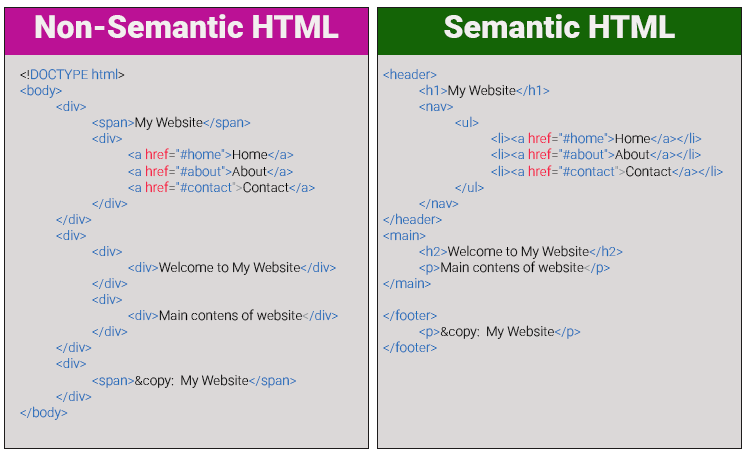
Semantic HTML tags describe the meaning of content, while non-semantic HTML tags are generic and primarily used for styling and layout purposes.
Non-semantic HTML tags don’t convey any specific meaning about the content itself.
Non-Semantic VS Semantic HTML5
Benefits of using Semantic HTML5
- Better user experience and accessibility: Screen readers and other tools can navigate semantic layouts more effectively and accurately describe your content to users.
- Better SEO performance: Semantic tags in HTML help web crawlers like Googlebot accurately identify the relevant parts of your content from your pages’ HTML. This can lead to better indexing and potentially higher rankings for relevant keywords.
- Increased chance of appearing for rich results: Semantic elements can enhance schema markup—a code you add to your pages to help Google display rich results. Rich results contain additional information like ratings, prices, or event dates.
- Future-proof code: Semantic HTML follows web standards that make your code more compatible with future technologies
- Clear communication: Developers, designers, and SEOs working collaboratively can easily understand the purpose of each section. Which makes maintaining and updating your website easier.
EPUB 3 also relies heavily on CSS3 for styling — see that guide for how the two work together.