




What Is EPUB 3?
EPUB 3 is the current standard for digital publications, offering enhanced features over EPUB 2 by leveraging HTML5, CSS3, and JavaScript. It supports rich media (audio/video), complex fixed-layouts (for comics/textbooks), interactivity, and global typography (vertical text). EPUB 3.2 is commonly used, with 3.3 being an official W3C standard.
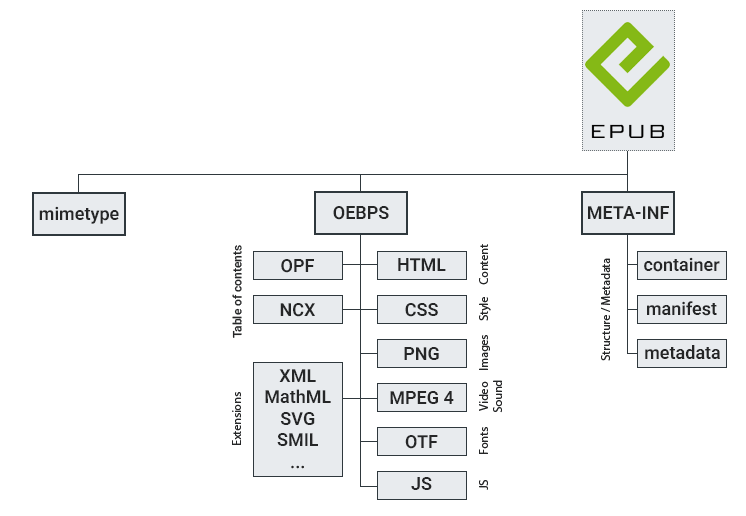
EPUB Structure
Key Features and Benefits of EPUB 3:
- Web Standards: Built on HTML5, CSS, and SVG, allowing for more detailed semantic markup, such as <section>, <aside>, and <figure>.
- Multimedia Integration: Supports embedded audio and video files, enabling interactive reading experiences.
- Fixed Layouts: Enables precise control over layout, crucial for graphic-intensive books, magazines, and children’s books.
- Advanced Typography: Provides better support for global languages, including vertical writing and complex scripts.
- Accessibility: Offers better accessibility features, crucial for readers with disabilities, including improved support for screen readers and semantic content.
- Interactivity: Allows JavaScript for interactive elements, such as quizzes or animations.
EPUB 3 Structure & Formats:
- Packaging: EPUB 3 uses the Open Container Format (OCF), which packs all components into a single file with a .epub extension.
- Navigation: Uses an XHTML Navigation Document for structured, flexible content navigation.
- Fonts: Supports both OpenType and WOFF/WOFF2 formats for better font embedding.
EPUB 3 is widely supported by modern e-readers and tablets, with 100% backward compatibility with EPUB 3.0, ensuring that older EPUB 3 content still works with newer 3.2/3.3 standards.